





What is a Fiber Optic Closure? The Essential Protector of Your Network
 Nov 17, 2025|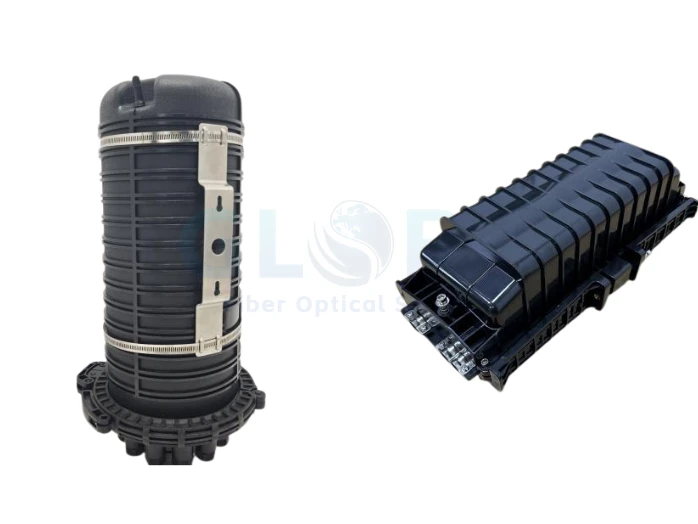
In our hyper-connected world, the integrity of the data flowing through fiber optic networks is paramount. A Fiber Optic Closure is a critical component in ensuring this integrity. Often called a splice closure or enclosure, it acts as a ruggedized "safe house" for the delicate splices where two optical fibers are joined, protecting them from environmental and mechanical damage.
Simply put, a fiber optic closure is a sealed container that provides a protected environment for fiber optic splices and connections. It is a fundamental component in telecommunications, CATV, and FTTx networks, safeguarding the network's most vulnerable points to ensure long-term reliability and optimal signal transmission.
Key Functions and Importance
The primary purpose of a fiber optic closure is to shield fragile splices from the outside world. Its core functions include:
Environmental Sealing:It creates a hermetic seal against moisture, dust, chemicals, and other contaminants that can degrade the optical signal or corrode the fibers. This is achieved using gaskets, O-rings, or heat-shrinkable sealing tubes.
Mechanical Protection:The robust housing, typically made from high-strength plastic or metal, protects the fibers from impact, crushing, vibration, and excessive bending or pulling forces that could cause breakage.
Splice Management:Inside, the closure organizes and stores spliced fibers on splice trays. These trays allow fibers to be coiled with a safe bend radius, keeping them organized and accessible for future maintenance or troubleshooting.
Main Types: Horizontal vs. Vertical
Fiber optic closures are primarily categorized by their structure and application into two types:
|
Feature |
Horizontal Closure |
Vertical Closure |
|---|---|---|
|
Shape |
Flat, box-like design |
Dome-shaped or cylindrical design |
|
Primary Use |
Straight-through and branching cable splicing |
Splicing and housing passive components like splitters |
|
Splice Tray |
Supports both single and ribbon fiber trays |
Primarily designed for ribbon fiber trays |
|
Sealing Method |
Mechanical compression (gaskets) |
Heat-shrink sealing or mechanical sealing |
|
Splitter Support |
Typically not supported |
Yes, often includes space for splitters |
|
Installation |
Aerial, Duct, Buried |
Aerial, Duct, Buried |
|
Capacity |
12 to 288 fibers |
12 to 288 fibers |
How to Choose?
Horizontal Closures are ideal for direct cable splicing points along a main distribution route.
Vertical Closures offer greater versatility in Fiber-to-the-Home (FTTH) distribution networks, as they can accommodate both splices and optical splitters in a single unit.
Typical Applications
Fiber optic closures are deployed wherever fiber cables need to be joined outdoors or in harsh environments:
Underground Systems:Manholes and direct-buried applications.
Aerial Installations:On utility poles.
Building Entry Points:Transitioning from outdoor to indoor cables.
Installation Procedure Overview
Proper installation is critical for performance. The general process involves:
Preparation:Open the closure and verify all components. Determine the cable entry points and strip the cable sheath to expose the required fiber length.
Cable Fixing:Secure the cable strength members (e.g., aramid yarn) to the closure's base and clamp the cable firmly to provide strain relief.
Splicing:Route fibers to the splice tray and perform fusion or mechanical splicing.
Fiber Management:Place the protected splices into the tray and carefully coil the excess fiber to maintain the minimum bend radius.
Sealing:After a final inspection, close the lid and ensure all seals are properly engaged to make the closure weatherproof.
Conclusion
While a small and often overlooked component, the fiber optic closure is a cornerstone of a robust and reliable optical network. By choosing the right type and adhering to strict installation standards, network operators can ensure signal integrity, minimize maintenance costs, and extend the service life of their infrastructure.
For high-quality fiber optic closures tailored to your specific project needs, please contact Sopto for professional solutions and reliable products.