





How Are Optical Splices Secured In a Splice Tray
 Nov 17, 2025|
 The main role of a fiber splice tray is to organize and safeguard delicate fusion or mechanical splices. Proper securing involves strain relief, neat fiber coiling, and physical separation to shield the splices from tension, bending, or compression. The key goal is to ensure that any external pulling force is absorbed by the cable's reinforced components rather than the fragile glass fibers.
Below is a structured guide to the securing process:
Step 1: Cable Strain Relief (Anchoring)

Purpose: This is the first critical safeguard. By securing the cable's load-bearing parts, the tension is diverted away from the optical fibers, preventing breakage.
Step 2: Fiber Coiling & Slack Management
•Extra Length: The coiled fibers provide flexibility for future adjustments or re-splicing.
•Stress Absorption: The loops act as a buffer, absorbing minor vibrations or movements that could stress the splice.

Step 3: Splice Protection & Isolation

•Secure Placement: The holder keeps the splice firmly in position, preventing movement.
•Physical Shielding: It isolates the splice from adjacent fibers, tray edges, or the cover, reducing risks of scratches or crushing.
•Additional Strain Relief: The fixed holder ensures the splice itself is not bent or pulled.
Step 4: Final Organization & Tray Closure
Purpose: The lid provides a final protective barrier against dust, moisture, and accidental contact.
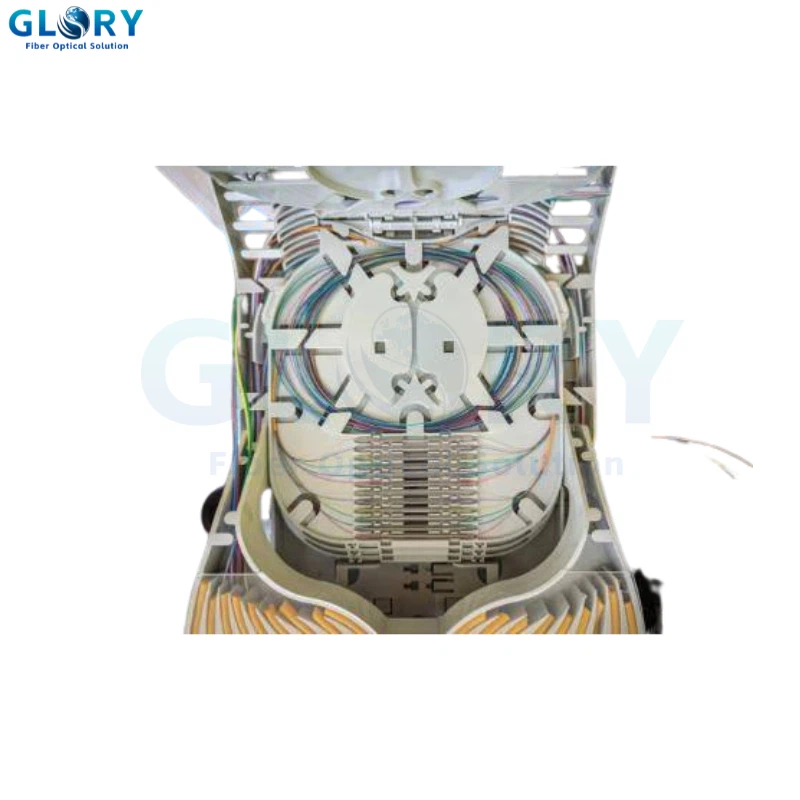
Summary: A Layered Protection Approach
1.Cable anchoring (diverts tension away from fibers).
2.Fiber coiling (prevents bending damage and provides slack).
3.Splice seating (protects the fusion/mechanical joint).
4.Tray closure (shields against environmental hazards).
Key Insights:
•Strain relief is the foundation-without proper cable anchoring, the entire splice is at risk.
•Bend radius control is essential-tight coils degrade signal quality.
•Splice trays work best inside enclosures (like closures or distribution panels) for full protection.