





How a 16-Port Fiber Distribution Box Makes Cabling Neater
 Mar 17, 2026|
 From "Tangled Mess" to "Orderly Organization"
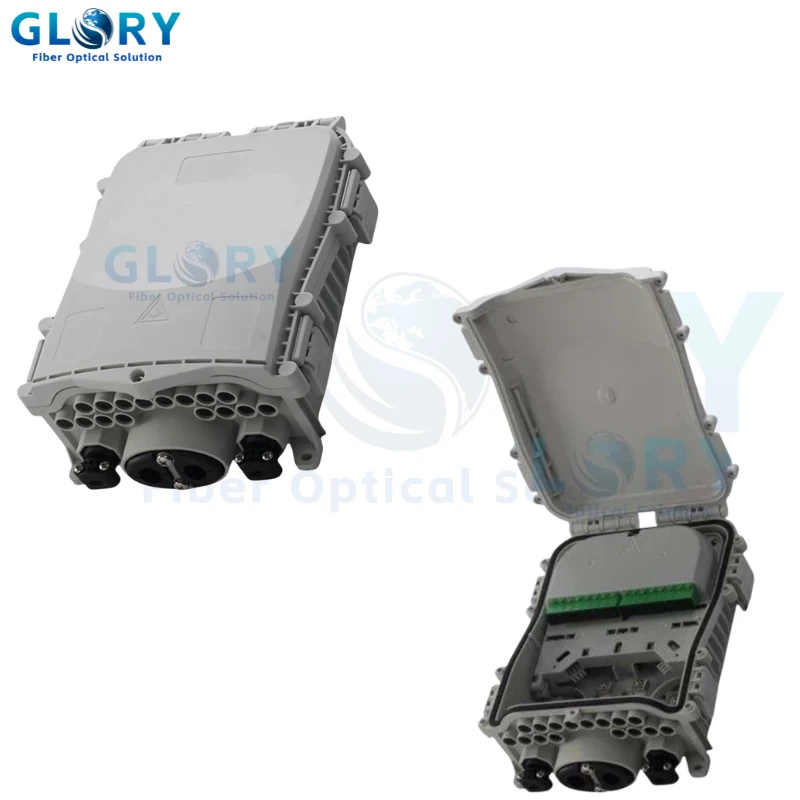
The root cause of traditional hallway cabling chaos is the "each does its own thing" approach. Each operator lays their own lines. Every new subscriber means one more cable pulled. Over time, the cables in the hallway accumulate, forming an ever-thickening "spider web" that's nearly impossible to clean up.
The core value of the 16-Port Fiber Distribution Box. is that it becomes the "traffic hub" for all these lines. It's like a shared space with multiple rooms, neatly housing fiber lines from four different operators within a single enclosure.
From now on, there's no need to install separate boxes for each operator-one 16-Port Fiber Distribution Box. can meet all the access needs for an entire floor.
Interior Design: The Secret Weapon for Neatness
Open a high-quality 16-Port Fiber Distribution Box., and you'll find a meticulously engineered interior layout:
Modular plug-in design allows splitters to be installed as easily as inserting a card, with no complex cabling or soldering required. Each port is individually isolated to prevent cross-interference. Clearly defined routing channels map out the path for every fiber, ensuring cables never get tangled.
Clear port identification is another crucial detail. Each port is printed with numbers and routing information. Technicians opening the door can see everything at a glance, without spending time tracing where each line goes. This means when repairs or expansions are needed, engineers can work precisely without affecting other users' networks.
Preventing "Spider Webs" from Regrowing at the Source
In the past, whenever a resident switched broadband providers, the installer would often just pull a new cable directly into the home, leaving the old one untouched. Day by day, abandoned "severed lines" accumulated, becoming new sources of visual pollution.
The shared model of the 16-Port Fiber Distribution Box. fundamentally solves this problem. All operator lines are routed into the same enclosure. In the future, even if residents change providers, there's no need to pull additional cables into their homes-simply adjust the patching inside the box. This design prevents "spider webs" from regrowing at the source.
A Revolutionary Improvement in Maintenance Efficiency
For network maintenance personnel, the changes brought by the 16-Port Fiber Distribution Box are equally significant.
"In the past, during bad weather, repair calls came one after another. We'd be busy for a long time just to get everything fixed." A maintenance manager admitted. Since the neighborhood unified its systems with shared splitter boxes, "routine inspection frequency has dropped significantly-workload reduced by over 90%."
This isn't an exaggeration. When all lines are neatly housed inside a clean enclosure, when every port is clearly labeled, when there's no need to spend half an hour searching for a single cable-improved maintenance efficiency is inevitable.
Key Considerations for Choosing a 16-Port Fiber Distribution Box
To truly become a "spider web terminator," what qualities does a 16-port splitter box need?
Adequate Protection
Installed in hallways, it may face humidity, dust, and temperature fluctuations. IP65-rated waterproof and dustproof protection, along with a wide operating temperature range, are basic requirements.
Reasonable Internal Space
Sixteen ports mean at least sixteen subscriber lines, plus feeder cables and splitters. The interior must have sufficient routing space and securing devices to prevent cable crowding and tangling.
Clear, Durable Labeling
Screen-printed markings last longer than adhesive labels, remaining legible even after years of use.
Flexible Installation Options
Hallway environments vary. Boxes supporting multiple installation methods-wall mounting, pole mounting, etc.-offer greater adaptability.
One Box, One Transformation of a Stairwell
In an old residential community, after workers neatly organized the cables into a white box, the once tangled "spider web" of cables in the stairwell disappeared. Residents were pleasantly surprised to find that the stairwells they passed through every day were now clean and tidy, and network stability had actually improved.
This is the value of the 16-Port Fiber Distribution Box -it's not just a technical device, but also an "invisible hero" that improves the living environment and enhances the quality of life. It allows network construction to move from "individual efforts" to "co-construction and sharing," and transforms stairwells from "visual pollution" to "clean and orderly."
Next time you walk into your stairwell and see that neat white box on the wall, remember: it's the silent "spider web terminator."