Outdoor Fiber Optic Cables: Complete Analysis of Types, Advantages & Selection Factors
 Nov 26, 2025|
Factor 1: Environmental Adaptation - Beyond Basic Weather Resistance
The Core Considerations:
Outdoor cables face dramatically different challenges depending on their deployment location. The temperature range is particularly crucial-from the freezing -40°C Scandinavian winters to the scorching +60°C Middle Eastern summers. Humidity and waterproofing requirements vary significantly between humid coastal areas and dry inland regions. UV protection becomes non-negotiable in high-altitude and tropical zones, while chemical resistance is essential for industrial and coastal environments where salt corrosion can destroy standard cables within months.
Selection Guidelines:
• For arctic regions: Specify PE sheathing rated for -60°C to prevent cracking
•In tropical climates: Choose UV-resistant materials with proven performance in +85°C conditions
• Coastal deployments: Opt for double-layer anti-corrosion protection with specialized sheathing
•Industrial zones: Select chemical-resistant materials tested against sulfur and acidic environments
Factor 2: Mechanical Performance - More Than Just Strength
Critical Parameters:
The mechanical demands vary dramatically by installation type. Aerial deployments require exceptional tensile strength (typically 1000N+ for long-span installations), while direct burial applications demand crush resistance exceeding 3000N/10cm. Dynamic bending requirements during installation differ significantly from static bending needs post-deployment, and impact resistance becomes crucial in areas prone to accidental damage.
Engineens:
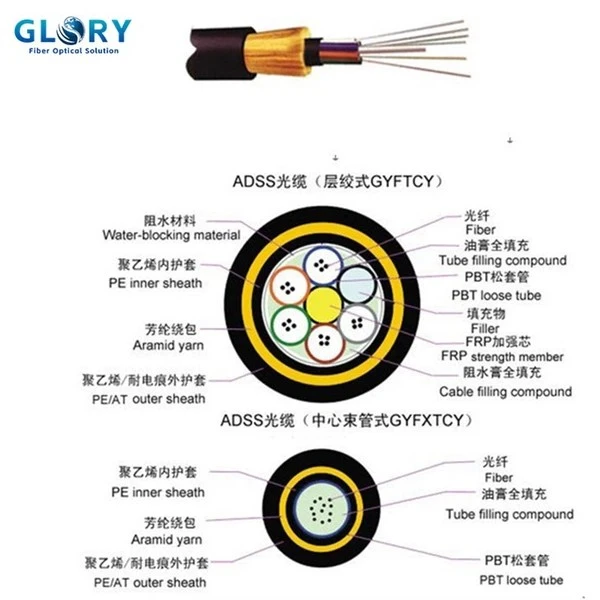
• Aerial installations: Incorporate aramid yarn reinforcement with weather-resistant outer sheathing
• Direct burial: Utilize double steel tape armoring for maximum protection
• Complex routing: Implement G.657.A2 fibers with 5mm bend radius capability
• High-risk areas: Deploy armored designs with additional rodent protection
Factor 3: Protection Level Design - Comprehensive Defense Strategy
Protection Analysis:
Moisture protection employs either dry water-blocking technology or gel-filled designs, each with distinct maintenance implications. Rodent protection ranges from glass yarn armor to chemical-repellent sheathing, with effectiveness varying by rodent species. Lightning protection requires non-metallic strength members in high-risk areas, while insect resistance demands special compound formulations in termite-prone regions.
Environmental Matching Guide:
• High-rainfall regions: Implement full-section water-blocking technology
•Lightning-prone zones: Utilize fully dielectric designs with proper grounding strategies
•Tropical regions: Apply insect-resistant compounds meeting international standards
Factor 4: Cost vs Lifespan Optimization - The Total Ownership Perspective
Lifecycle Cost Analysis:
The initial procurement typically represents only 25-35% of the total cost of ownership. Installation expenses can vary by 200% depending on cable weight and flexibility. Maintenance costs accumulate over decades, making reliability paramount, while outage impacts can exceed €10,000 per hour for critical infrastructure.
Economic Recommendations:
• 25-year design lifespan typically offers optimal economic balance
• High-quality cables can reduce operational expenses by 60% over 15 years
• Strategic redundancy in critical routes provides exponential reliability benefits
Outdoor Cable Types
Direct Buried Cables
In the absence of duct infrastructure, cables can be buried directly into the ground in a trench or using a vibratory plow.
Duct Cables
Duct cables (or conduits) offer a highly protective environment for fiber-optic cables. They are typically buried, and then the cables are air-blown, jetted, pulled, or pushed into the duct.
Loose Tube Cable
Loose tube cable provides stable performance over a wide temperature range, small, high fiber count cables, and is compatible with any telecommunications-grade optical fiber.
Ribbon Cable
Ribbon cables offer higher fiber counts and greater fiber density than any other cable construction designed for the outside plant (OSP), four times the highest-fiber-count loose tube cable.
Micro Duct Cable
The micro duct is the miniaturized plastic conduit that subdivides internal duct space into smaller compartments into which micro cable can be installed by blowing, jetting, or pushing.
Drop Cable
Drop cable is the cable that runs from the distribution point or cable to the subscriber/user.
Underwater Cable
The casing material has good hydrolysis resistance and high strength; the cable paste is filled to provide key protection for the optical fiber.
Armored Cable
Armored cable is a kind of outdoor cable with protective armor wrapped around the fiber cable core.
Advantages of Outdoor Cable
Resistance to harsh environments
Outdoor cables are designed to withstand extreme weather conditions, making them suitable for deployment in areas with high moisture, temperature variations, or exposure to UV radiation.
Long-distance connectivity
Outdoor cables are capable of providing reliable communication over long distances, making them ideal for inter-building or long-haul connections.
Physical protection
The additional layers or armors in outdoor cables provide protection against physical damage, ensuring the integrity of the fiber strands.
At Glory, we've spent 15 years refining outdoor cable technology because we understand that your network is the foundation of your operations. Our solutions aren't just products-they're insurance policies for your digital infrastructure.