





What is a fiber optic patch cord?
 Nov 13, 2025|
 When we talk about high-speed internet, data centers, and 5G, we often focus on the "brains" and "hearts" like routers and switches. However, what ensures the accurate and smooth flow of data between these "organs" are the seemingly insignificant yet crucial fiber optic patch cords. They are like the "capillaries" of the network world-slender and fragile, yet carrying the surging torrent of information. Today, we'll unveil the secrets behind them.
I,What Exactly is a Fiber Patch Cable?
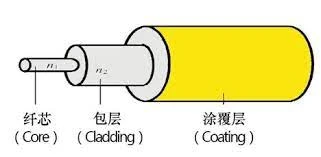
Simply put, a Fiber Patch Cable is a length of fiber optic cable capped at both ends with connectors, designed for flexible, plug-and-play connections between optical devices. It connects equipment like optical transceivers, switches, and servers, efficiently transmitting optical signals from one end to the other.
A typical fiber patch cable consists of three parts:
Core: An ultra-pure glass filament that serves as the actual pathway for light signals.
Cladding: The material surrounding the core, which uses its lower refractive index to "trap" the light inside the core via total internal reflection.
Coating: The "plugs" on each end of the cable, crucial for achieving precise alignment.
II,Why are Fiber Patch Cables So Critical?
You might wonder, how much of a difference can a simple cable make? The answer is: extraordinary!
High Performance: Compared to copper cables, fiber optic patch cords offer extremely high bandwidth and extremely low signal loss, making them an essential choice for 10G, 100G, and higher-speed networks.
Flexibility: As a "patch cord," fiber optic patch cords make connecting, debugging, and maintaining rack-mounted equipment incredibly easy, eliminating the need for fusion splicing.
Reliability: High-quality fiber optic patch cords ensure stable connections, reducing network downtime caused by poor contact or excessive loss.
Standardization: Standardized connector types enable interoperability between equipment from different manufacturers, laying the foundation for global optical networks.
III,How to Choose the Right Fiber Patch Cable? Understanding Key Categories
Selecting the right fiber patch cable requires attention to several core dimensions:
1. By Fiber Mode: Single-mode vs. Multimode
Single-mode Fiber Patch Cables: Feature a very thin core, allowing only one light mode to travel. Key Features: Extremely long transmission distances (up to tens or hundreds of kilometers), very high bandwidth. Primarily used in telecommunications, long-haul networks, and CATV.
Multimode Fiber Patch Cables: Have a thicker core, allowing multiple light modes to travel simultaneously. Key Features: Shorter transmission distances (typically up to 500m-2km), lower cost. Widely used in data centers, enterprise LANs, and storage area networks (SANs).
2. By Connector Type: Know Your "Plugs"
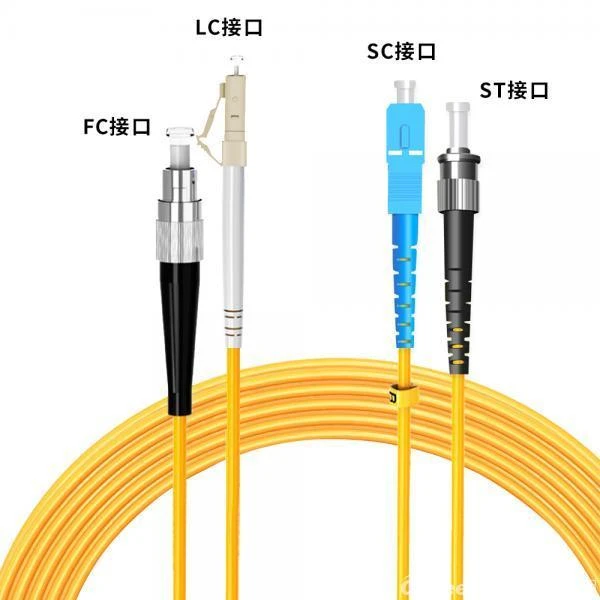
Connectors are the "face" of the patch cable. The most common types include:
LC Type: Small square duplex connector. Key features: Compact size, high port density. The mainstream choice for modern data centers and high-density applications.
SC Type: Square push-pull design. Key features: Stable connection, high cost-effectiveness. Commonly used in LAN and Fiber to the Home (FTTH) installations.
FC Type: Circular threaded design. Key features: Very robust connection, excellent vibration resistance. Primarily used in test equipment and telecommunications equipment rooms.
ST Type: Circular bayonet connector. Key features: Commonly found in older networks, gradually being replaced by LC and SC type connectors.
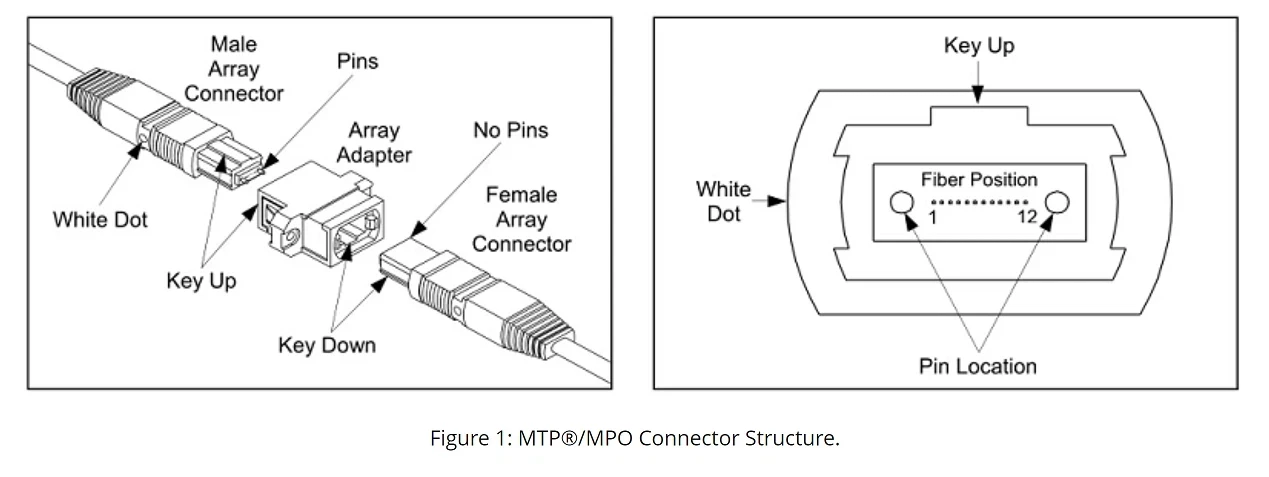
MTP/MPO Type: Multi-core single-unit connector. Key features: Can connect 12, 24, 48 or more fibers simultaneously. Designed for high-density 40G/100G+ data centers.
3. By Polish Type: Focus on Connection Performance
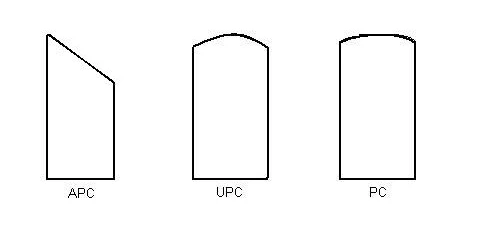
This determines the return loss (signal reflection) at the connection point:
PC: Physical Contact, with a slightly curved end face. The most common type.
UPC: Ultra Physical Contact, with a more pronounced curvature for better return loss than PC. Used in digital TV, telephony, and data systems.
APC: Angled Physical Contact, with an 8-degree angled end face, typically green. It directs reflected light into the cladding instead of back to the source, achieving the lowest return loss. Critical for FTTH, CATV, and other analog signal applications.
IV,Core Application Scenarios for Fiber Patch Cables
Inside Data Centers: Connecting servers to switches, forming the underlying pathway for data deluges.
Fiber-to-the-Home (FTTH): Delivering the optical signal from the service provider's equipment directly to the ONT/Modem in your home.
Local Area Network (LAN) Cabling: Providing high-speed backbone connections between different floors and departments in an office building.
Telecommunications Networks: Interconnecting cell towers and core network equipment.
Security & Surveillance: Transmitting high-definition video signals over long distances with immunity to interference.
Conclusion: Choose the Right "Capillaries" to Energize Your Network
Fiber Patch Cables are far more than simple wires; they are the foundational building blocks of an efficient and reliable modern optical network. Understanding their types, connectors, and applications is crucial for network planning, deployment, and maintenance.
When selecting, always remember:
Long-distance, high-bandwidth? Choose single-mode.
Short-distance, high-performance cost-effectiveness? Choose multimode.
High density? Choose LC. High-speed parallel links? Choose MTP/MPO.
High-performance digital systems? Choose UPC. Analog signals? APC is required.
Investing in high-quality, compliant Fiber Patch Cables is an investment in the health and future of your entire network system. They ensure the unimpeded flow of information "blood," allowing your business to run at the forefront of the information superhighway.