





Smooth Migration from GPON to XGS-PON: Intelligent Evolution Strategy Without Replacing Fiber Infrastructure
 Nov 27, 2025|
 Why XGS-PON is the Natural Successor to GPON
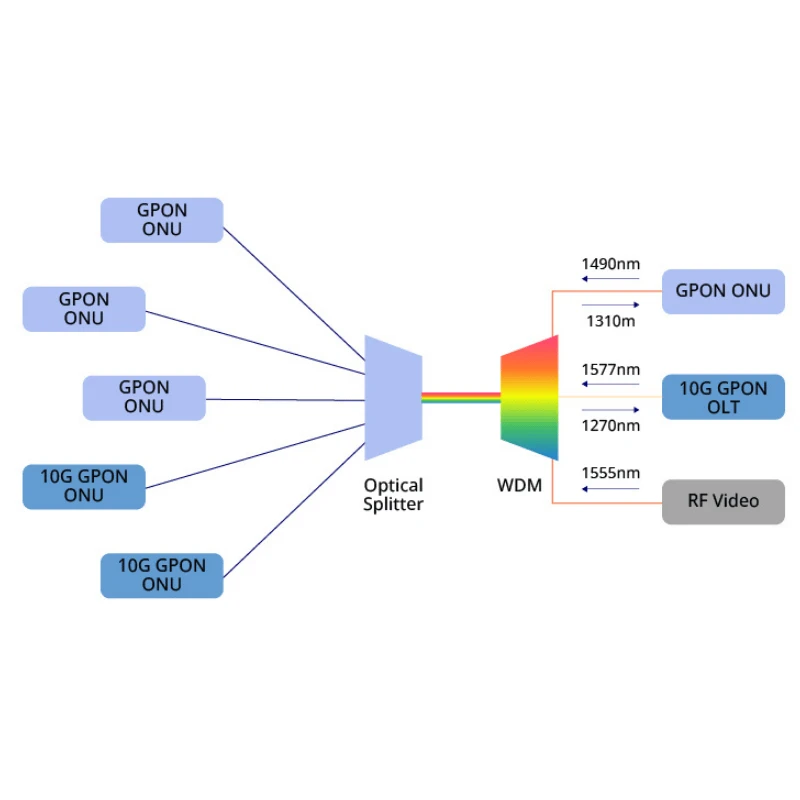
As a next-generation passive optical network solution, XGS-PON delivers symmetrical 10Gbps transmission rates, representing a more than fourfold increase over GPON technology (2.5G down/1.25G up). Its standout advantage lies in compatibility with existing Optical Distribution Network infrastructure, enabling service providers to achieve a significant leap in network capability without large-scale fiber reprovisioning.
Core Value: Investment Protection and Maximized Returns
Full compatibility with existing fiber networks: Utilizes already deployed resources, significantly reducing upgrade costs
Phased transition strategy: Supports long-term coexistence of both technologies, allowing flexible migration based on user needs
Seamless operational transition: Existing operational processes and knowledge systems can be largely retained
Comparison of Two Major Evolution Paths
Option 1: External Wavelength Division Multiplexer Approach
This conventional method requires installing independent combiner equipment in the central office to merge signals from GPON OLTs and new XGS-PON OLTs into the same fiber.
Implementation Challenges:
Requires additional central office space and equipment investment
Additional connection points increase optical loss (approximately 1-1.5dB)
Complicates cabling, increasing potential failure points
Requires secondary adjustments after full-network upgrade, adding engineering complexity
Option 2: Integrated Combo PON Solution (Recommended)
Combo PON represents the currently preferred evolution strategy, utilizing cards that integrate dual-mode optical modules and combiner functions to directly replace existing equipment.
Significant Advantages:
Simple and rapid deployment: Only card replacement needed, physical fiber connections remain largely unchanged
Optimal optical performance: No additional attenuation, ensuring transmission quality
Unified operations: Dual-mode terminals work plug-and-play on the same interface
Future-ready design: Ample room for future technology upgrades
As a professional solution provider in optical communications, GLORY's Combo PON product line offers service providers an ideal evolution choice, ensuring smooth transition while maximizing return on investment.
Key Implementation Considerations
Successful network evolution requires not only appropriate technology selection but also rigorous project planning and management.
1. Pre-Upgrade Network Assessment: Establishing a Solid Foundation
Conduct comprehensive network inspection before upgrading:
Optical link loss analysis: XGS-PON has stricter power budget requirements (N1 class ≤29dB, N2 class ≤31dB)
Equipment compatibility verification: Confirm existing platform supports new card types
User needs classification: Identify priority user groups for upgrade
2. Phased User Migration: Optimizing Transition Experience
Priority for high-value users: Upgrade terminal equipment first for enterprise and premium residential users
Gradual implementation: Regular users continue with existing terminals, upgrading according to schedule
Hybrid operation mode: Fully leverage Combo PON's compatibility features to reasonable arrangement investment rhythm
3. Post-Upgrade Verification: Ensuring Service Quality
Conduct comprehensive testing after deployment including:
Optical power measurement: Ensure optical intensity at each node meets specifications
Performance validation: Key parameter testing for throughput, latency, etc.
Stress testing: Stability assessment under high-load scenarios
Equipment compatibility verification: Testing interoperability between old and new terminals
Professional Solutions Supporting Smooth Transition
With over 15 years of technical accumulation in optical communications, GLORY provides complete network evolution solutions for service providers:
Complete terminal product series: Meeting requirements from fiber splicing equipment to user-end terminals
High-quality optical components: Low-insertion-loss connection assemblies ensuring signal integrity
Customization capability: Providing tailored solutions for specific network environments
Rapid response mechanism: Order delivery within 20 days, accelerating evolution progress
Conclusions and Recommendations
The transition from GPON to XGS-PON is completely manageable, with success depending on selecting scientific technology paths and implementation plans. Based on deep industry insight, we recommend:
Prioritize integrated solutions: Although single-card costs are relatively higher, advantages in operational efficiency, space savings, and future adaptability are significant from a full lifecycle perspective
Establish refined project management: Successful network evolution requires thorough preparation including existing facility assessment, user migration planning, and acceptance testing
Choose qualified partners: Cooperation with suppliers possessing rich experience and complete product systems can effectively reduce evolution risks and ensure project success
By adopting scientific evolution strategies, service providers can not only meet current bandwidth demands but also lay the foundation for introducing future technologies like 50G-PON, achieving sustainable network development and continuous value enhancement.
GLORY Optical Communication specializes in R&D and manufacturing of fiber optic communication products and FTTx solutions, providing high-quality products and professional technical support to global service providers. For more detailed solutions regarding GPON to XGS-PON evolution, please contact us at sales@gloryoptic.com.