





More Than a Panel: How Fiber Patch Panels Form the Intelligent Base of Your Network
 Dec 30, 2025|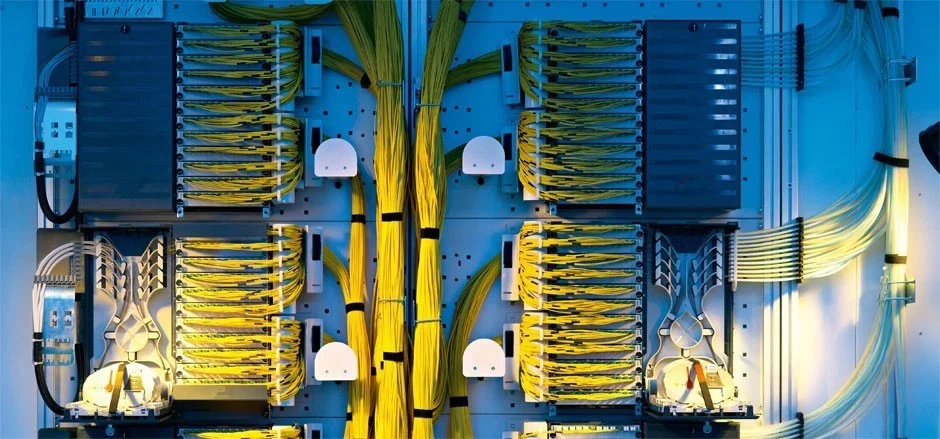
In the long corridors of data centers or within the central rooms of telecom operators, we are often struck by a familiar sight: dense cascades of cables pouring out from equipment racks, intertwined in complex webs. Performing a simple patch cord change in such an environment becomes an expedition-time-consuming, labor-intensive, and fraught with risk. This "cable jungle" is more than just visual clutter; it is a silent killer of network reliability, scalability, and operational efficiency.
The root cause, however, often lies not with the cables themselves, but in the absence of an intelligent, systematic "command center." The Optical Fiber Patch Panel (often referred to as an ODF), a device traditionally viewed as passive hardware, is being redefined. It has evolved from a simple collection of ports into the physical-layer cornerstone that ensures efficient network operation-from the core to the access layer, and from the present into the future.
Ending the Chaos-From "Jungle" to a Clear and Orderly Hub
The chaos of traditional cabling directly leads to three major pain points: difficult fault identification, slow change implementation, and wasted physical space. The primary mission of the modern fiber patch panel is, first and foremost, to establish order.
• Modular Design Creates Flexibility: Like building with Lego bricks, a standardized modular structure allows network administrators to flexibly configure different types (e.g., LC, MTP) and quantities of adapter modules as needed. Whether for initial deployment or future upgrades, capacity can be scaled without replacing the entire frame. This achieves a balance between protecting investment and responding rapidly to business needs.
• High Density and Precision Cable Management: Through innovative front-and-rear access separation, vertical and horizontal cable managers, adjustable strain relief bars, and comprehensive labeling systems, the patch panel plans a clear path for every single patch cord. This not only maximizes rack space utilization but, more importantly, makes every patching operation predictable, repeatable, and traceable. It drastically minimizes downtime risks caused by human error.
When a patch panel is correctly deployed, it presents an aesthetic of rational order, transforming maintenance work from an "artisanal skill" into an efficient, standardized "process."
Supporting Evolution-The Intelligent Foundation for Future Networks
With the explosion of 5G, cloud computing, and IoT, networks are becoming increasingly dynamic and complex. The physical layer-the cabling system-must evolve from a static "utility" into an intelligent foundation that supports business agility.
• Protection and Stability are Fundamental: High-quality fiber patch panels employ robust metal structures to provide comprehensive physical protection for delicate fiber connectors. Their scientific airflow design effectively prevents hot spots within racks, ensuring long-term stable signal transmission in high-load, high-density environments. This is the first line of defense for "24/7" network reliability.
• Manageability Equals Productivity: A clear identification system is not just labels; it's the "map" for network operations. Integrated with documentation systems, it enables faults to be located within minutes and the impact of changes to be quickly assessed. Every efficient operation performed at the patch panel directly reduces the network's Mean Time to Repair (MTTR) and increases overall availability.
• Forward-Looking Compatibility: Supporting current mainstream connectivity is just the baseline; seamless compatibility with future, higher-speed standards (like the evolution towards 800G or 1.6T Ethernet) is key. This requires built-in performance headroom and upgrade pathways in adapter types, internal channel performance, and thermal management.
Therefore, choosing a patch panel is, in essence, a strategic decision for the 5-10 year lifecycle of your future network.
Delving into Applications-The Seamless Connectivity Engine in FTTX Networks
In the vast network revolution of Fiber-to-the-Home (FTTH), the role of the fiber patch panel moves from the background to the forefront, becoming the seamless connectivity engine linking operators to millions of households.
• The Core Node of the Optical Distribution Network (ODN): In FTTX architecture, the patch panel is the core physical carrier of the ODN. It acts as the Main Distribution Frame (MDF) in the central office, aggregating all feeder cables; as the distribution point inside outdoor street cabinets, integrating 1:N splitters to distribute signals from one fiber to multiple homes; and as the user terminal unit inside buildings, finalizing the termination and management of the drop cable.
• The Key to Agile Operations: For operators, service activation speed directly impacts revenue. Pre-connectorized, modular patch panel solutions transform the process of activating a new subscriber from complex splicing work into a simple "plug-and-play" patching operation. This can reduce activation time from hours to minutes, significantly boosting business responsiveness and customer satisfaction.
• Optimizing Total Cost of Ownership: From initial deployment efficiency to ease of daily maintenance and speed of fault resolution, a well-designed patch panel system significantly reduces the operator's Operational Expenditure (OPEX) in the access network layer. It liberates valuable resources from repetitive manual tasks, allowing them to be redirected toward value-added service innovation.
From Cost Item to Strategic Asset
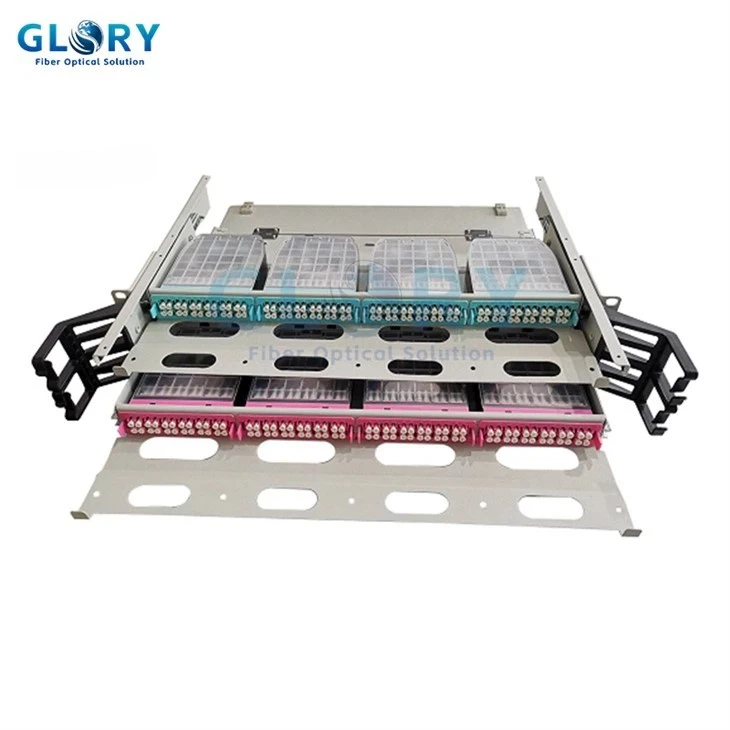
Today's Optical Fiber Patch Panel has long transcended its literal meaning. It is a convergence of cable manager, fault-location map, upgrade-and-expansion platform, and business-enabling interface. It is the "converter" that transforms chaos into clarity and reliability, the "ballast" that supports the smooth evolution of the network into the future, and the "invisible engine" that drives efficiency gains in specific business scenarios.
Investing in an excellent fiber patching system is no longer just purchasing "chassis and modules." It is acquiring a "warranty for order," an "option for scalability," and a "plan for operational efficiency improvement" for your entire network infrastructure. Making a wise choice at the physical layer is about laying the most solid and efficient cornerstone for your entire digital business.
Exploring a Better Solution: GLORY's Optical Fiber Distribution Frame (ODF) solutions deeply integrate the concepts of modularity, high density, and forward-looking design. Offering a full range of products for scenarios from core data centers to fiber access networks, we are committed to helping clients transform their cabling systems from a cost center into a competitive network advantage.