





Introduction to Four Types of connectors for optical fiber patch cords
 Dec 02, 2025|
 There are various types of connectors for optical fiber patch cords, which are of great significance in the field of optical fibers and cables. Broadly speaking, various types of optical cable connectors can be classified according to standards such as application, number of optical fiber cores, optical fiber mode, transmission method, transmission medium, length, polishing type and termination method. Browse this article to learn about the detailed classification of fiber optic connector types.
I. SC Connector: Standard Selection
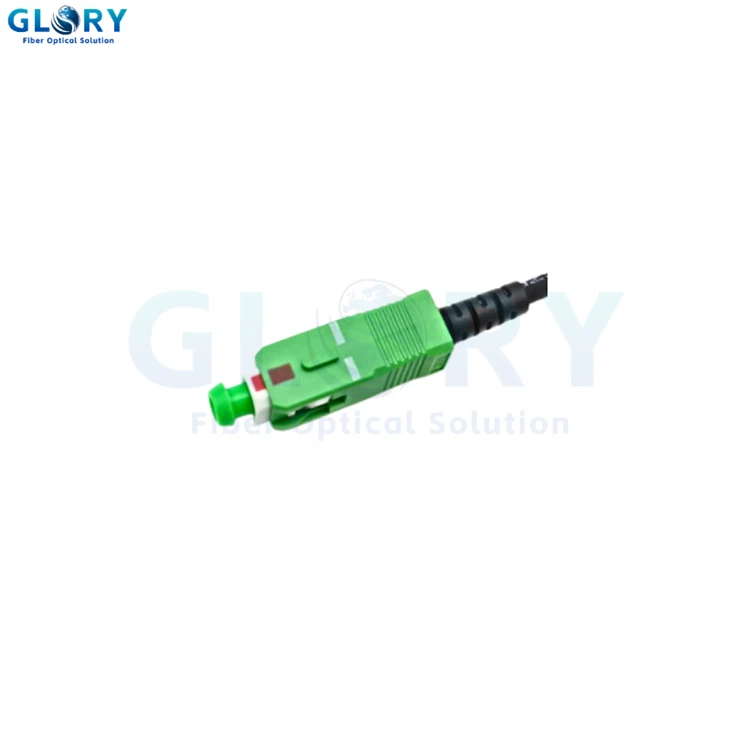
One of the most widely used connectors in the field of optical fibers is the SC (square connector) connector. Due to its unique functions and advantages, it has gained popularity and become the first choice for many applications. The SC connector is easily recognizable due to its square shape, which distinguishes it from other connectors. This design can be easily identified and distinguished from other connectors in the network. The square shape also provides stability and prevents rotation, ensuring a safe connection.
One of the main advantages of the SC connector is its push-pull coupling mechanism. This mechanism enables quick and easy connection and disconnection without any additional tools. The connector can be easily inserted or removed simply by pushing or pulling the main body of the connector. This feature is particularly useful in situations where frequent connections and disconnections are required, such as during data center or network maintenance.
SC connectors are widely used in data centers where high-speed data transmission is of vital importance. They are compatible with both single-mode and multi-mode optical fibers, making them suitable for a wide range of applications. Whether transmitting data over long distances or within a local area network, SC connectors can provide reliable and efficient connections. Telecommunications is another field where SC connectors are widely used. They are typically used in telephone networks, fiber-to-the-home (FTTH) installations and other telecommunications applications.
The high performance and reliability of SC connectors make them an ideal choice for transmitting voice, data and video signals over optical fiber networks.
Local area networks (Lans) also benefit from the use of SC connectors. They are typically used in Ethernet, allowing for high-speed data transmission between devices. The SC connector offers a secure and stable connection, ensuring minimal signal loss and high data transmission rates.
II. LC Connector: Compact yet powerful
LC (Lucent Connector) is a type of optical fiber connector and belongs to the small Size (SFF) connector category. It is renowned for its compact size and features a 1.25mm pin, which is smaller than the standard 2.5mm pin found in other connectors. This small-sized design has promoted the wide popularity of LC connectors, especially in data communication applications that require high-density connections.
LC connectors are small in size and are highly suitable for high-density environments such as data centers where space is usually limited. Compared with larger connectors, network designers can achieve a greater number of connections in the same physical space by using LC connectors. This is particularly important in today's data-driven world, where the demand for increased bandwidth and faster data transmission is constantly growing.
The trend of efficient cabling has also driven the popularization of LC connectors. As the network continues to develop and upgrade to higher speeds, the demand for more efficient and reliable connections has become crucial. LC connectors feature low insertion loss and high return loss, ensuring minimal signal attenuation and maximizing the performance of optical fiber links. This makes them highly suitable for high-speed data transmission applications, such as Gigabit Ethernet, etc.
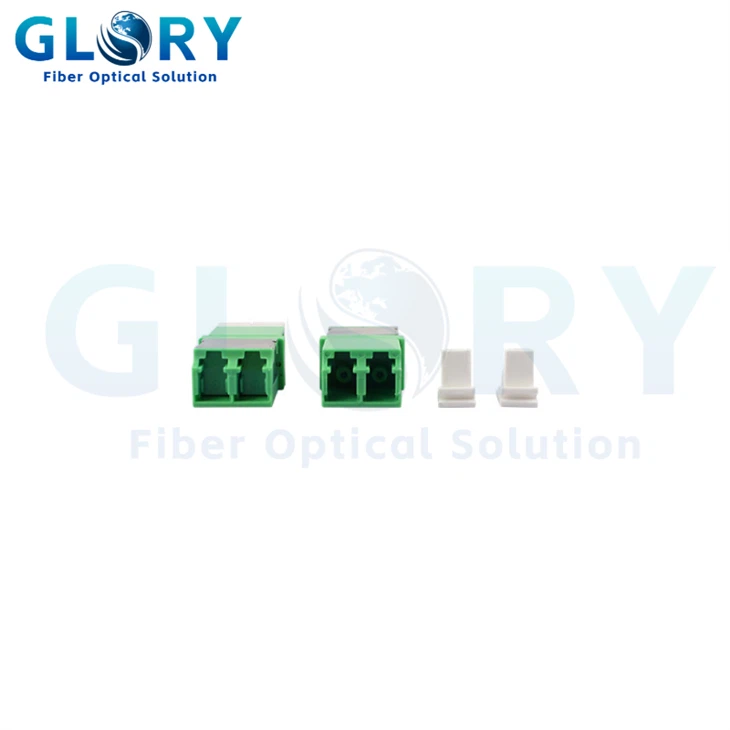
Another reason for the wide use of LC connectors is their compatibility with various types of optical fibers, including single-mode and multi-mode optical fibers. This versatility allows for seamless integration into different network architectures and ensures that LC connectors can be used in a wide range of applications.
III. MTP/MPO Optical Fiber Connectors
The MTP/MPO optical fiber connector stands out from other optical fiber connectors due to its unique design as a multi-fiber connector. Unlike SC or LC connectors that typically accommodate a single optical fiber, MTP/MPO connectors combine multiple optical fibers within a single rectangular ferrules. These connectors can accommodate 12 to 24 optical fibers and are highly suitable for high-bandwidth optical fiber parallel connections.
To accommodate multiple optical fibers within the ferrules, larger-sized MTP/MPO connectors are required. This design allows for the simultaneous transmission of multiple data streams and is highly suitable for applications that require high data capacity, such as 40G and 100G networks.
However, the complexity of MTP/MPO connectors lies in their polarity and the configuration of male and female heads. The connector is equipped with a keying mechanism to ensure correct alignment and prevent misconnection. The key up and key down directions refer to the position of the key on the connector, which must match the corresponding keyway on the adapter or socket. In addition, MTP/MPO connectors come in both male and female versions, and they must be correctly paired for a successful connection.
Although MTP/MPO connectors are complex, they have significant advantages in high-density connections and efficient data transmission. They can handle multiple optical fibers in a single connector, thereby reducing the amount of space required for connection, which makes them valuable in data centers and other environments with limited space. In addition, the parallel transmission capability of MTP/MPO connectors can achieve higher bandwidth and faster data transmission rates.
IV. ST Connectors: Traditional and reliable
Despite its traditional design, ST (straight tip) connectors are renowned for their unparalleled reliability in the field of optical fibers. These connectors feature a bayonet-type coupling mechanism, ensuring a safe and stable connection. The bayonet coupling involves a twist-lock mechanism, in which the connector is inserted and then twisted to lock it in place. This design provides a firm and reliable connection that can prevent accidental disconnection.
The ceramic ferpin of the ST connector further enhances reliability and ensures the precise alignment of the fiber core. This alignment method can minimize signal loss and maximize the performance of the optical fiber link. The ceramic material used in the ferpin is also wear-resistant and corrosion-resistant, which contributes to the long-term reliability of the connector.
ST connectors are widely used in various industrial applications, including manufacturing plants, oil and gas facilities, and transportation systems. These connectors are suitable for environments where optical cables may be subject to physical stress, such as pulling or bending. The robust structure of the ST connector enables it to withstand these stresses and maintain a reliable connection.
Another advantage of ST connectors is their compatibility with both single-mode and multi-mode optical fibers. This versatility makes it suitable for a wide range of applications, from long-distance communication to local area networks. ST connectors are available in both simplex and duplex configurations, enabling bidirectional communication via a single optical fiber or separate transmitting and receiving optical fibers.
In conclusion, the world of optical fiber connectors is vast and vibrant. Choosing the right connector requires understanding the specific needs of the application and considering factors such as size, compatibility, and future scalability. The reliability and efficiency of communication networks depend on the careful selection and proper maintenance of these connectors.