





Fiber Optic Splice Closure: The Unsung Heroes of Network Reliability
 Dec 11, 2025|
More Than Just a "Box": The Interconnection Core of Fiber Optic Networks
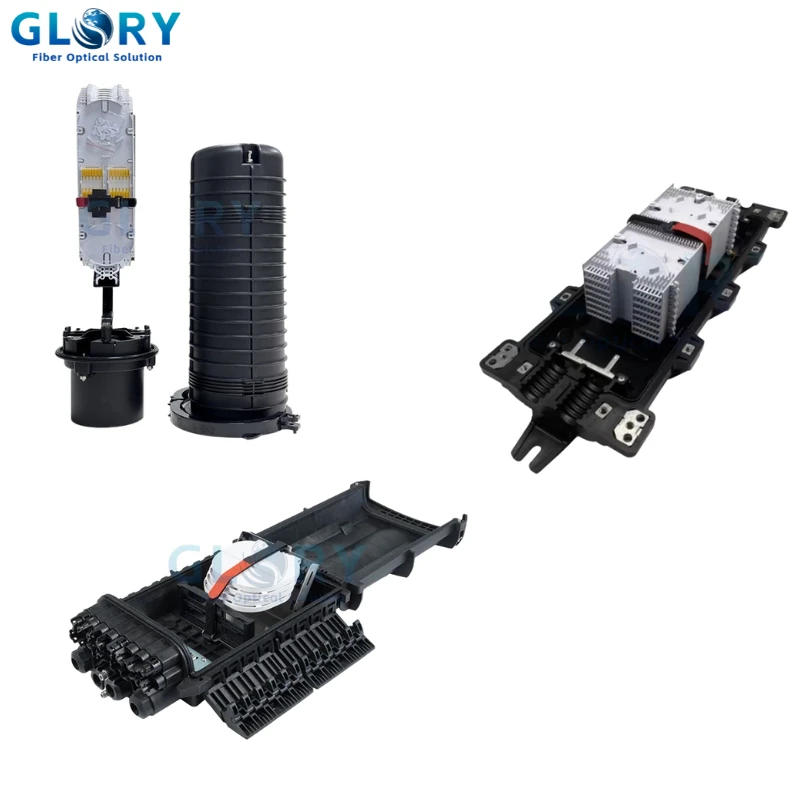
The fiber optic splice box, a seemingly simple mechanical enclosure, is actually the most critical splicing and protection node in a fiber optic network. When two sections of fiber optic cable need to be connected, or when the network needs to be branched, the fiber optic splice points act like the "joints" of the network-they are extremely precise, but also equally fragile. The core mission of the splice box is to provide a permanent, stable, and completely isolated "home" for these sensitive connection points, protecting them from external environmental influences.
Three Core Responsibilities, Protecting Every Kilometer of Signal
1. Absolute Sealing, Resisting the Forces of Nature
A key indicator of a high-quality splice box is its protection rating (usually IP68). This means it must achieve:
Complete waterproofing: Able to withstand heavy rain, floods, and even short-term submersion.
Dustproof: Maintaining internal cleanliness in dusty and sandy environments.
Long-term stability: Designed for a service life of 25 years or more, matching the lifespan of the fiber optic cable itself.
2. Mechanical Protection, Building a Robust Enclosure
Pressure resistance: Able to withstand soil pressure when buried underground and accidental ground loads.
Impact resistance: Preventing damage from construction or accidental impacts.
Corrosion-resistant materials: Using high-grade engineering plastics or stainless steel to resist chemical corrosion and UV degradation.
3. Precise Fiber Management
The internal structural design demonstrates true professionalism:
Redundant fiber storage: Neatly coiled spare fibers provide possibilities for future maintenance or re-splicing.
Splice tray system: Securely fixing each splice point to prevent micro-bending losses.
Clear and logical labeling: Facilitating quick identification and troubleshooting. Technological Evolution: From Basic Sealing to Intelligent Sensing
Modern fiber optic connector technology has gone far beyond the basic requirement of "sealing":
Airtight and pass-through designs accommodate different cable entry and exit methods.
Mechanical and heat-shrink sealing: The former facilitates re-connection during maintenance, while the latter provides a more durable seal, meeting different application needs.
Intelligent upgrades: Some high-end models now integrate optical performance monitoring sensors, capable of real-time monitoring of internal temperature and humidity, and even providing early warning of micro-bending losses.
Why is this choice so important? The cost of a single failure
Low-quality or improperly installed connectors can lead to:
Gradual signal degradation: Moisture ingress can slowly corrode the fiber, causing signal quality to deteriorate over time.
Catastrophic outages: Seal failure leads to water ingress, causing complete link failure.
High maintenance costs: Fault location is difficult, requiring road excavation or cable replacement.
In critical applications such as 5G fronthaul, submarine communications, and smart cities, the economic losses caused by such failures can reach tens of thousands of dollars per minute.
Conclusion: Invisible Quality, Visible Reliability
Fiber optic connectors are hidden under manholes, installed on utility poles, and buried alongside roads – almost never seen by the end user. However, it is these thousands of "unsung heroes" scattered throughout the network that form the most solid foundation of our global digital infrastructure.
When choosing fiber optic connectors, remember: you are buying more than just a hardware component; you are buying decades of network reliability. They are inconspicuous yet indispensable; simple in structure yet sophisticated in technology – this is the fiber optic connector, the true guardian behind the scenes of the fiber optic era.