





Analysis of Rodent-Resistant Optical Fiber Cable Technology: From Rodent Challenges to Engineering Selection
 Dec 16, 2025|
 Analysis of Rodent-Resistant Optical Fiber Cable Technology: From Rodent Challenges to Engineering Selection
Optical fiber cables are the "nerves" of communication networks, but their installation environments often overlap with rodent activity areas. Rodents frequently gnaw on cables due to their innate need to grind down their continuously growing incisors, leading to communication interruptions. For example, statistics from Yunnan Power Grid from 2018 to 2020 show that rodent damage accounted for over 35% of optical cable failures . To address this challenge, rodent-resistant optical cables, with their special structures and material designs, have become a key technology for ensuring communication security. This article provides a systematic discussion on the causes of rodent damage, the principles of rodent-resistant technologies, a comparison of cable types, selection advice, and future trends.
1. The Severity and Causes of Rodent Damage
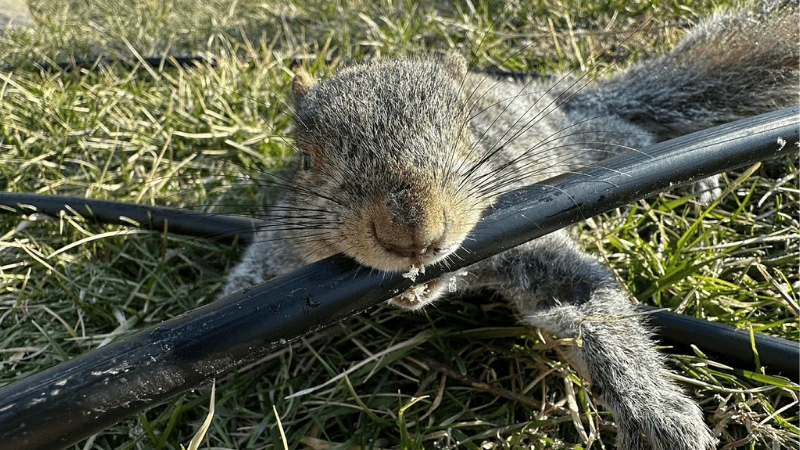
Rodents gnaw on optical cables primarily due to their biological instinct: their incisors grow continuously throughout their lives, requiring them to gnaw on hard objects to control length . The plastic or rubber coating of optical cables恰好 meets this gnawing need. Furthermore, urbanization encroaches on rodent habitats, forcing them to migrate to areas where cables are often installed, such as underground conduits and equipment rooms, increasing the overlap between human and rodent activity spaces . Gnawing not only causes direct economic losses (e.g., repair costs and service interruptions) but can also trigger chain reactions. For instance, disruptions to dispatch data or differential protection services carried by power communication networks can threaten the stability of the electrical grid .
2. Core Technical Principles of Rodent-Resistant Cables
Currently, there are three main types of rodent-resistant technologies, each with distinct advantages and disadvantages :
Chemical Stimulation Method: This involves adding capsaicin or other irritants into the cable sheath. When rodents gnaw on the sheath, these chemicals strongly irritate the oral mucosa and taste nerves, causing the rodent to abandon the activity . This method is low-cost and effective initially, but the repellent can gradually leach out due to rainwater erosion or natural degradation, leading to unstable long-term effectiveness . Additionally, the production process may expose workers to the irritants, raising safety and environmental concerns .
Physical Stimulation Method: This method adds a layer of glass fibers or Fiber Reinforced Plastic (FRP) between the inner and outer sheaths of the cable. When gnawed, the glass fibers break into sharp fragments that injure the rodent's mouth, acting as a deterrent . This non-metallic structure is suitable for strong electromagnetic environments (like substations) and offers lightning protection benefits . However, the glass fibers can pose a risk to installation personnel, and the manufacturing cost is relatively high .
Armored Protection Method: This most common method involves wrapping a metal layer (like stainless steel tape or thin round steel wires) around the cable core, providing a high-strength physical barrier against bites . The reliability of this method is high, and its cost is comparable to that of standard cables, making it a mainstream solution . For instance, stainless steel tape offers high hardness, while thin steel wires, with their larger diameter (0.45–1.6mm), provide significantly better bite resistance compared to steel tape (typically only 0.15–0.20mm thick) .
3. Comparison of Mainstream Rodent-Resistant Cable Types and Performance
Depending on the armor material, commonly used rodent-resistant cables are mainly divided into two types, with characteristics as shown in the table below :
|
Cable Type |
Representative Model |
Structural Characteristics |
Rodent Performance |
Diameter/Weight (approx., 48 cores) |
Application Scenarios |
|---|---|---|---|---|---|
|
Stainless Steel Tape Armored |
GYTA53 |
Double-layer sheath + 304 stainless steel tape, direct burial structure |
Good, but overlapping tape seam is a potential weak point |
Diameter: 15.0 mm, Weight: 220 kg/km |
Direct burial in high-risk rodent areas |
|
Thin Steel Wire Armored |
GYXTW |
Loose tube structure + steel wire armor, possibly with composite armor |
Excellent, steel wire diameter is multiple times the tape thickness |
Diameter: 10.2 mm, Weight: 120 kg/km |
Aerial, duct applications requiring flexibility |
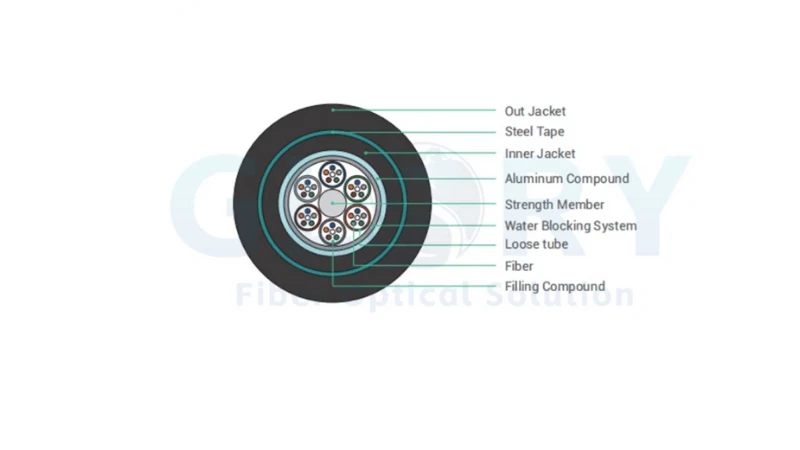
Stainless Steel Tape Armored Cable
Uses 304 stainless steel tape for high corrosion resistance. However, these cables are heavier, less flexible, and the overlapping seam of the tape can be a potential point of failure for persistent rodents .
Thin Round Steel Wire Armored Cable
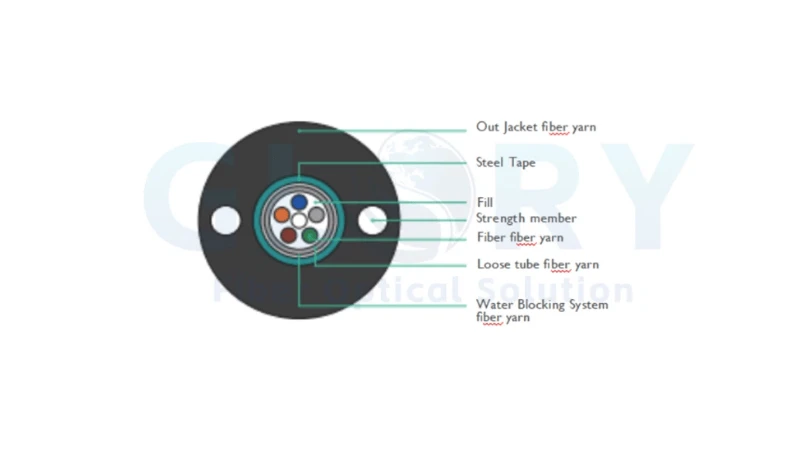
Utilizes a loose tube structure to reduce diameter, resulting in lighter weight and good flexibility, making it more suitable for aerial installation . For high fiber counts (>48 cores), a micro-sheath tube design is used to manage the fibers efficiently . To enhance mechanical performance, some models add steel tape over the wires for composite armor .
4. Selection and Installation Suggestions for Rodent-Resistant Cables
Selection should comprehensively consider environmental risk, cost, and long-term effectiveness :
Selection by Scenario:
High-Risk Areas (mountains, forests, high-speed rail lines): Prioritize steel wire armored GYXTS cables, which balance rodent resistance, light weight, and cost .
Strong Electromagnetic Environments (e.g., substations): Choose non-metallic FRP armored cables to avoid electromagnetic interference .
Direct Burial: If weight is not a primary concern, GYTA43 can provide reliable protection, but attention should be paid to the sealing of the steel tape overlap .
Economic Trade-offs: Rodent-resistant cables cost about 1.5–2 times more than standard cables but can lower long-term maintenance costs. In low-risk areas (e.g., urban indoor environments), standard GYTS cables are sufficient .
Installation Considerations:
Avoid using glass fiber cables in confined spaces to prevent fiber splinters from harming personnel .
For aerial installation, consider adding anti-climbing devices (e.g., rotating PVC pipes or spherical barriers) to block rodents from climbing poles .
5. Challenges and Future Development Trends
Current rodent-resistant cables still face challenges: for example, the chemical method lacks long-term effectiveness, and metal armor may corrode in specific environments . Future technological directions include:
New Material Applications: Cables with modified nylon sheaths enhance surface bite resistance through ultra-hard materials and are more environmentally friendly . New patents also explore multi-layer structures combining plant-based essential oil repellents with physical barriers.
Structural Innovation: Models like GYXTW53 use "steel wire + steel tape" composite armor to balance protection strength and flexibility .
Ecologically Compatible Solutions: Developing non-lethal physical barriers (e.g., pole anti-climbing structures) to reduce environmental impact .
Conclusion
Rodent-resistant optical cables are an indispensable technical solution for addressing rodent damage. Selection must be based on scientific evaluation. Between steel wire armor and steel tape armor, the GYXTS cable is more suitable for most scenarios due to its excellent rodent performance, light weight, and cost-effectiveness . In the future, with the development of new materials and intelligent monitoring technologies (e.g., embedded sensors for real-time bite detection), rodent-resistant cable technology will evolve towards higher efficiency and environmental protection, further ensuring the vitality of communication networks .

This article synthesizes information from industry technical documents and measured data. Specific selection should be consulted with professional manufacturers based on the actual engineering environment.