





Air Blown Fiber vs Conventional Fiber: A Comprehensive Comparison for Network Planners
 Nov 20, 2025|
 :: What is Air Blown Fiber?
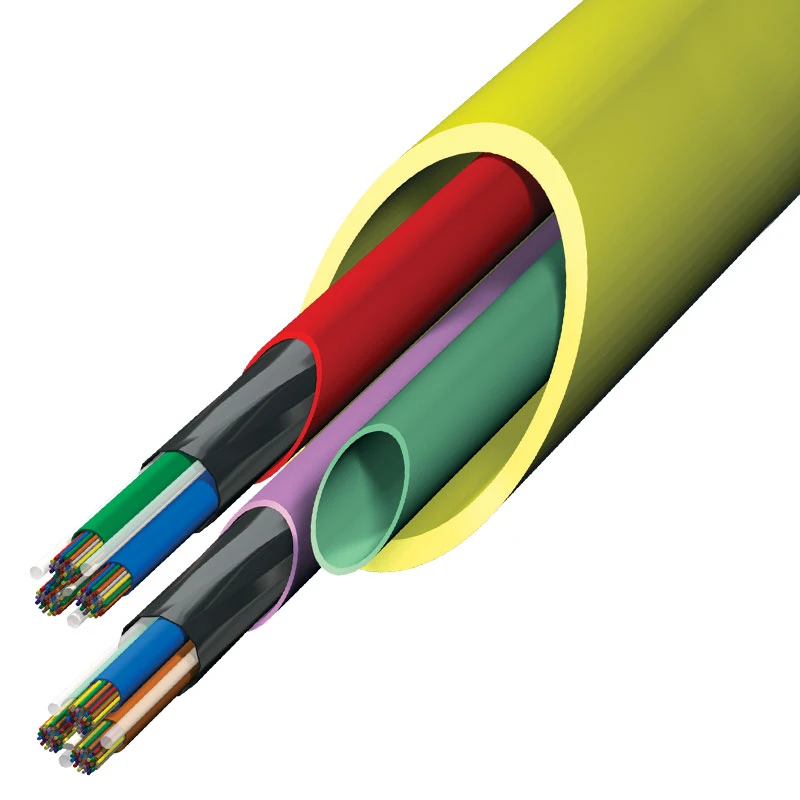
Air Blown Fiber (ABF) is an innovative method for deploying optical fiber. The core concept involves first installing a network of empty tubes (microducts). When needed, fiber optic bundles are then "blown" into these tubes to the desired location using compressed air or nitrogen. Proponents claim its main advantages are lower initial investment, greater design flexibility, and ease of handling future network expansions and changes.
:: Components of an Air Blown Fiber System with GLORY Solutions
A complete ABF system consists of four key components. As a leading manufacturer of fiber optic distribution hardware, GLORY provides compatible solutions for a robust infrastructure:
Tube Cables: These are bundles of microducts that form the "highway" for the fiber. GLORY's Fiber Splice Closures and Outdoor Fiber Optic Termination Boxes offer robust, outdoor-grade protection for branching, splicing, and terminating these tube cables.
Blowing Equipment: The specialized machinery used to inject the fiber bundles into the tube network.
Fiber Bundles: Optical fibers designed specifically for blowing, featuring a special coating to reduce friction.
Connection & Termination Hardware: This includes tube distribution cabinets and push/pull connectors. GLORY's Fiber Distribution Boxes (FDB) and Pre-connectorized Terminal Boxes are critical here, ensuring reliable connections and orderly management of the tube network.
Before blowing fiber, integrity and continuity tests are essential. After blowing, the fibers must be terminated and housed in distribution hardware, which is the primary function of GLORY's Fiber Termination Boxes and Fiber Optic Distribution Frames, providing a secure environment for splicing, patching, and organization.
:: Conventional Fiber Optic Cable Systems
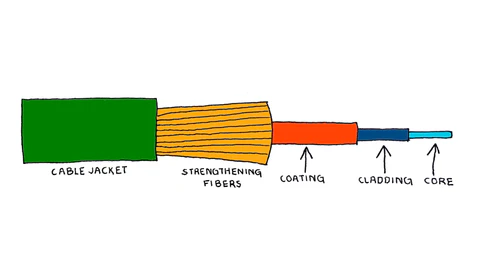
Conventional cabled fiber is the proven, standards-based solution. The fibers are pre-contained within protective cables at the factory. Whether for outdoor use (loose tube, ribbon) or indoor use (tight-buffered), their performance and quality comply with international standards.
Installation involves pulling the pre-connectorized cable along the planned pathway. The cable is then terminated and managed using GLORY's Fiber Termination Boxes or Optical Distribution Frames (ODF). The system is ready for immediate use upon installation. Its high fiber density (e.g., a cable under 1 inch in diameter can hold over 864 fibers) is a significant advantage. Moves, adds, and changes are typically handled by re-patching at cross-connect points or, if needed, installing a new cable.
:: Cost and Flexibility: A Deeper Look
Initial Cost: The initial cost of an ABF system lies in its tube cable infrastructure. While deploying empty tubes can save on initial fiber costs, the complex system and specialized hardware can make upfront material costs higher than conventional solutions.
Long-Term Cost & Flexibility: ABF's advantage is future expansion without reinstalling duct infrastructure. However, each blowing operation requires specialized crews and equipment. In contrast, conventional cable deploys all fibers at once; future expansion uses pre-installed spare fibers, which is faster and more cost-effective.
The GLORY Perspective: For projects with a stable network layout and clear fiber needs (like most FTTH deployments), conventional cable often offers a better total cost of ownership. GLORY's Fiber Distribution Boxes and Termination Boxes provide standardized, cost-effective solutions for high-density fiber management.
:: Outdoor Plant & Long-Term Reliability
For outdoor applications, reliability is paramount.
Air Blown Fiber: Outdoor tube cables have water-blocking outer jackets, but the long-term risks of moisture ingress, insect infestation, or tube deformation in empty microducts require consideration.
Conventional Fiber Cable: Traditional outdoor cables are manufactured with integrated water-blocking materials, meeting stringent standards like ICEA-640, ensuring long-term stability and protection.
As a specialist in Fiber Splice Closures, GLORY products are designed to protect splice points for conventional cables, offering superior waterproof, dustproof, and mechanical protection for critical network nodes.
:: Conclusion: Which is Right for Your Project?
The choice depends on your project's specific needs:
Choose Air Blown Fiber when: The network's final architecture is uncertain, future path changes are highly likely, and the budget allows for a premium for this flexibility.
Choose Conventional Fiber Cable when: The network topology is stable, and you require high reliability, low total cost of ownership, and standards-based compatibility. This is the preferred solution for most enterprise networks, data center interconnects, and FTTH deployments.
Why Partner with GLORY?
With over 15 years of experience, GLORY Optical Communication specializes in passive optical products and FTTx solutions.
For Conventional Cable Projects: We offer a full range of Fiber Splice Closures, Termination Boxes, Distribution Boxes, and Patch Cords, all quality-assured and standards-compliant.
For Air Blown Fiber Projects: We provide perfectly matched termination and protection solutions to ensure the ABF system is reliably implemented.
Regardless of your technology choice, GLORY delivers the most cost-effective products and expert technical support. Our team is ready to assist with design and customization.