





3 Questions You Must Ask Before Buying Fiber Optic Cable
 Feb 13, 2026|
 Author:Willa Shang willa@gloryoptic.com
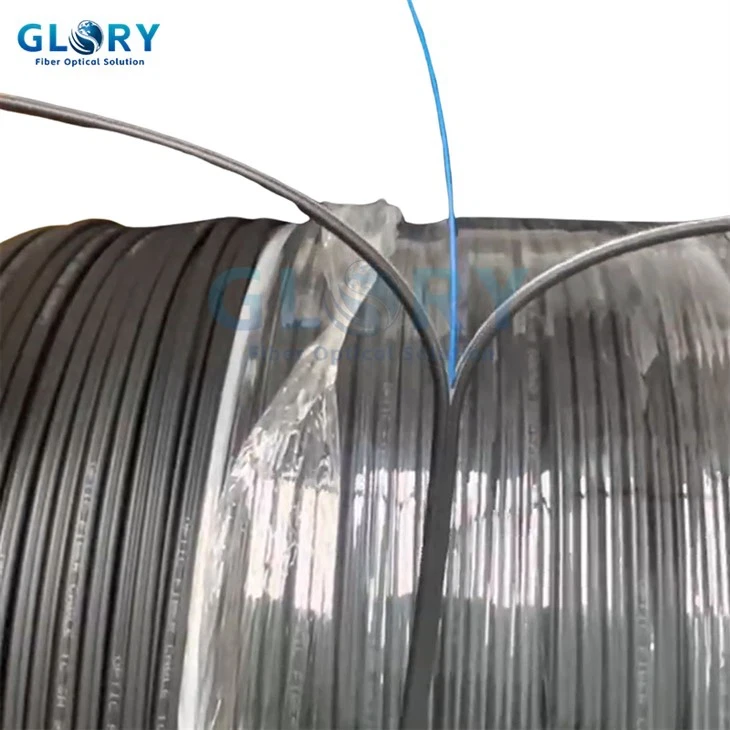
Purchasing fiber optic cable may seem simple when planning a network project, but it often becomes a potential source of cost overruns and project delays. Faced with a market full of products of varying specifications and prices, how can you quickly make an informed choice? Whether you're upgrading your home office wiring or building a network for a small business, be sure to ask yourself these three core questions before clicking "order" or contacting a supplier. This will help you easily avoid common pitfalls and ensure your investment gets the best return.
You can shift from passive purchasing to proactive planning, engaging in efficient and professional communication with suppliers to ensure you're not just buying cables, but also long-term performance stability, safety compliance, and investment protection. Remember, the right choice begins with asking wise questions.
Question 1: Indoor or Outdoor Use?
Why You Must Ask: This is the most important and critical question when choosing cable. Using cables unsuitable for the environment not only wastes money but also poses serious safety and performance risks.
Consequences of Choosing the Wrong Option:
Using outdoor cable indoors: Its thick moisture-proof and armored layers make the cable stiff and heavy, making it difficult to lay in walls or conduits. It often lacks sufficient flame retardancy, violating building safety codes.
Using indoor fiber optic cable outdoors: It cannot withstand UV rays, rain, and extreme temperatures. The sheath will age and crack rapidly, allowing moisture to seep in, degrading signal quality, and ultimately causing failure, potentially within a year.
How to Choose and Save Costs:
Purely Indoor Environments (Offices, Data Center Server Rooms, Home Network Cabinets): Always choose indoor fiber optic cables, paying particular attention to whether they use "Low Smoke Halogen-Free (LSZH)" sheath materials. This is crucial for personnel safety and compliance with fire regulations-a one-time investment that reduces significant risks.
Outdoor or Entry Points (Lay along Exterior Walls, Direct Burial, Entering Buildings from Pole): Outdoor fiber optic cables are mandatory. Choose the specific subtype based on the installation method (e.g., armored fiber optic cables for direct burial, and reinforced UV-resistant fiber optic cables for overhead installation).
Cost-Saving Tips: Clearly define the use case. Avoid purchasing expensive fully armored outdoor cables for indoor use, and never use fragile indoor cables for outdoor use to save money.
Question 2: Do I need to pay a "premium" for security? (Regarding Flame Retardancy)
Why You Must Ask: In indoor environments, the fire safety characteristics of cables are not an "add-on feature," but a necessity. Ignoring this can lead to regulatory penalties and significant potential liability.
Key Knowledge: Standard PVC sheathed cables produce large amounts of dense, toxic smoke when burning, a leading cause of fire-related deaths. Low Smoke Halogen-Free (LSZH) materials produce very little smoke and do not release toxic halogen gases when burning.
How to Choose and Save Costs:
Ask your supplier directly: "Does this cable meet LSZH (Low Smoke Halogen-Free) standards?" or "What is its flame retardancy rating?"
In mature markets such as Europe and North America, the use of Low Smoke Halogen-Free (LSZH) cables is often mandatory for wiring in commercial buildings and public utilities. Even for high-end residential projects, the use of such cables is strongly recommended.
Cost-Saving Tip: While LSZH cables may be slightly more expensive per unit, they can save you on future retrofitting costs to meet standards, as well as incalculable safety risk costs. This is true "value for money."
Question 3: Is it flexible enough? Can it meet current and future needs?
Why you must ask this question: This question concerns ease of installation, system reliability, and flexibility for future upgrades.
Focus on two key technical points:
Minimum Bending Radius: This is the smallest angle the cable can bend without causing significant signal loss. A smaller bending radius means the cable is more flexible, easier to pass through cabinet corners and conduits, saving installation time and effort, and reducing the risk of fiber damage due to excessive bending angles.
Fiber Type: This determines the network's speed and transmission distance limitations. For most enterprise networks and gigabit/10-gigabit home applications, OM4 multimode fiber is an ideal choice with excellent cost-effectiveness and supports upgrades for many years. For long-distance transmission or extreme performance requirements, OS2 single-mode fiber is needed.
How to choose and save costs:
Request a product specification sheet from the supplier and look for the "minimum bending radius" value-the smaller the better.
Choose fiber type based on transmission distance: Use multimode fiber (OM4) for distances under a few hundred meters, and single-mode fiber (OS2) for longer distances. If in doubt, choosing single-mode fiber is more forward-looking. Although optical modules are slightly more expensive, the cable cost is currently comparable to multimode fiber, and it avoids the high rewiring costs due to distance or bandwidth limitations later on.
Money-saving tip: Choosing more flexible cables reduces installation difficulty and damage rate. Selecting the appropriate fiber type provides an "upgrade path" for the network, protecting this cabling investment for decades and avoiding the biggest waste: network failure. let re-do in the near future.
Let Questions Create Value for You
Buying fiber optic cable is not a simple commodity transaction; it's an investment in infrastructure. Taking a few minutes to clarify these three questions:
1. Indoor or Outdoor? – Addresses safety and durability fundamentals.
2. Is LSZH Flame Retardancy Needed? – Addresses compliance and life safety.
3. Is the Bend Radius and Fiber Type Suitable? – Addresses installation difficulty and future upgrades.
You can shift from passive purchasing to proactive planning, engaging in efficient and professional communication with suppliers to ensure you're not just buying cables, but also long-term performance stability, safety compliance, and investment protection. Remember, the right choice begins with asking wise questions.